
THE BEET: VOLUME 18; WEEK 3
FULL SHARE & YELLOW HALF SHARE PICK UP TONIGHT
Pick up today: 5pm - 7:30pm at PS 56 on the corner of Gates and Downing
This Week's Share
Spinach
Red Crisphead Lettuce (‘Magenta’)
Toscano Kale
Fordhook Swiss chard
Japanese Turnips
‘Quickstar' Kohlrabi
Scallions
Red Rover radishes
Potted basil
Fruit: Ted's own organically grown strawberries
Next week’s vegetable lineup will include many of this week’s vegetables along with bok choy and garlic scapes. It’s salad season. The first of your warm weather crops, including cucumbers and squashes, are still a ways off.
Coming up: Week of July 4
A reminder that there will be no distribution the week of July 4.
Distribution will start up again the following week, and will continue until the final pick-up on November 7.
Enjoy the holiday!
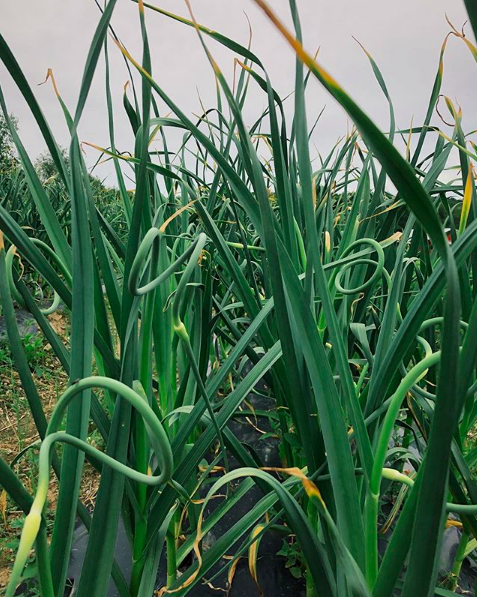
Letter from Windflower Farm
Delivery #3, Week of June 17th, 2019
What’s new on the farm?
It’s Saturday, and I’ve broken two tillage implements today—a bed shaper and a rototiller. I wonder if I am being sent a message to cut out tillage. Agriculture is responsible for 24% of global carbon emissions, and while most of that relates to animal agriculture, a substantial share comes from the kinds of tillage operations that all farms perform, including organic vegetable farms. We are not no-till farmers. Although no-till has the potential to reduce CO2 emissions, so far, it’s a technique only shown to be reliable where cold soils are less a problem than they are here in the Northeast. Moreover, for the most part, no-till farmers have substituted tillage with the use herbicides to kill weeds, which is obviously not an option for those of us who farm organically. Nevertheless, we are concerned with the carbon footprint of our farm, and are interested in reducing tillage, if in just a small way. To that end, we have been using a permanent bed system here for many years.
For us, field preparation begins by spreading compost and then disking into the soil the cover crop we sowed the previous fall. By using a special bed-shaping disk we reestablish our beds and “feed the soil” at the same time. Soil microbes use the carbon and nitrogen provided by the cover crops and compost to live, and in the process produce plant-available nutrients. We wait a week or two after disking to let the process unfold, during which time the cover crop’s residues break down. Rototilling, which we do quickly, is the final tillage step in making a bed suitable for seeding or transplanting. If we’ve done this well, we have eliminated the primary, carbon burning tillage step of moldboard plowing.
Repairing the broken disk is something I can do easily in the shop; the tiller is a bigger problem and will require parts from the John Deere dealership. With any luck, I’ll have beds ready for the last of our eggplants, sweet peppers, chiles and tomatoes by the end of the week.
It is now Sunday, and raining, and I am pleased that we managed to harvest strawberries before the heavy rain has arrived. Organic berries are delicate when ripe, and spoil quickly if wet. Having eliminated raspberries from our lineup, strawberry growing is currently the most fraught of our agricultural enterprises. A 75% crop is a good one. Late frosts obviously ruin them, as does hail, but so will a hard rain. If our strawberries have managed to escape damaging weather events, the depredations of field mice and other little creatures will no doubt take a share of the crop. And as harvest time nears, and the red ripe crop is finally ready, Cedar Waxwings will take another share of the harvest. Strawberries, being bright red, have clearly decided on flamboyance as their seed dispersal strategy, and birds apparently see bright red before seeing any other color. As I have said, a good strawberry crop is one in which we can send more than 75% of our berries to you, and this year’s crop might just be one. Knock on wood.
Have a great week, Ted
Work Shift
Your CSA depends on YOU to help make it run smoothly. All Clinton Hill CSA members with full vegetable shares are required to complete two two-hour work shifts during the season. Members with half vegetable shares work one two-hour work shift. Sign up for your 2019 work shifts by clicking here!
For those who find volunteering on site to be a problem, we may have other opportunities for you; please email volunteer@clintonhillcsa.org for more information.
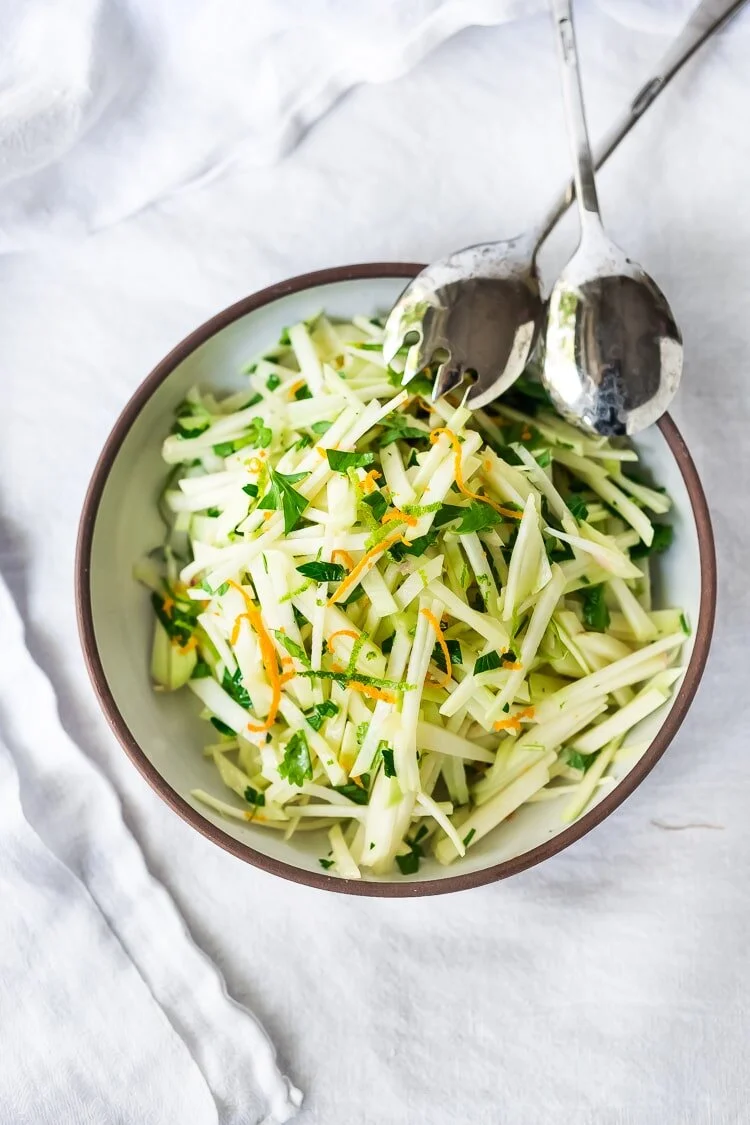
Recipe: Kohlrabi Slaw
From Feasting at Home
Ingredients
6 cups kohlrabi -cut into matchsticks or grated in a food processor -about three x 4 inch bulbs (or you could substitute sliced fennel, apple, jicama, cucumber, or cabbage for part of the kohlrabi for more diversity)
½ cup chopped cilantro ( one small bunch)
half of a jalapeno -minced
1/4 cup chopped scallion
orange zest from one orange, and juice
lime zest from one lime, and juice
Citrus Dressing
1/4 Cup olive oil
¼ Cup fresh orange juice ( juice form one orange)
1/8 Cup lime juice plus 1 T ( juice from one large lime), more to taste
1/4 Cup honey ( or agave syrup)
1/2 tsp kosher salt
1 Tablespoon rice wine vinegar
Instructions
Trim and peel kohlrabi. ( I normally have to peel twice to get through the thick skin). Cut off two ends. Cut in half from top to bottom. Thinly slice, rotate and slice again, making 1/4 inch matchsticks.
Place in large bowl with chopped cilantro, scallions, finely chopped jalapeño (1/2), lime zest and orange zest.
Whisk dressing together in a small bowl. Toss with salad. Refrigerate until serving. Garnish with zest and cilantro. This tastes good the next day too.
If you give this a try, don't forget to share and tag us on social media! We're on Instagram and Twitter @ClintonHillCSA, as well as facebook, and you can find Windflower Farm on Instagram too (@windflowerfarm).